What does OSHA actually require for handwashing?
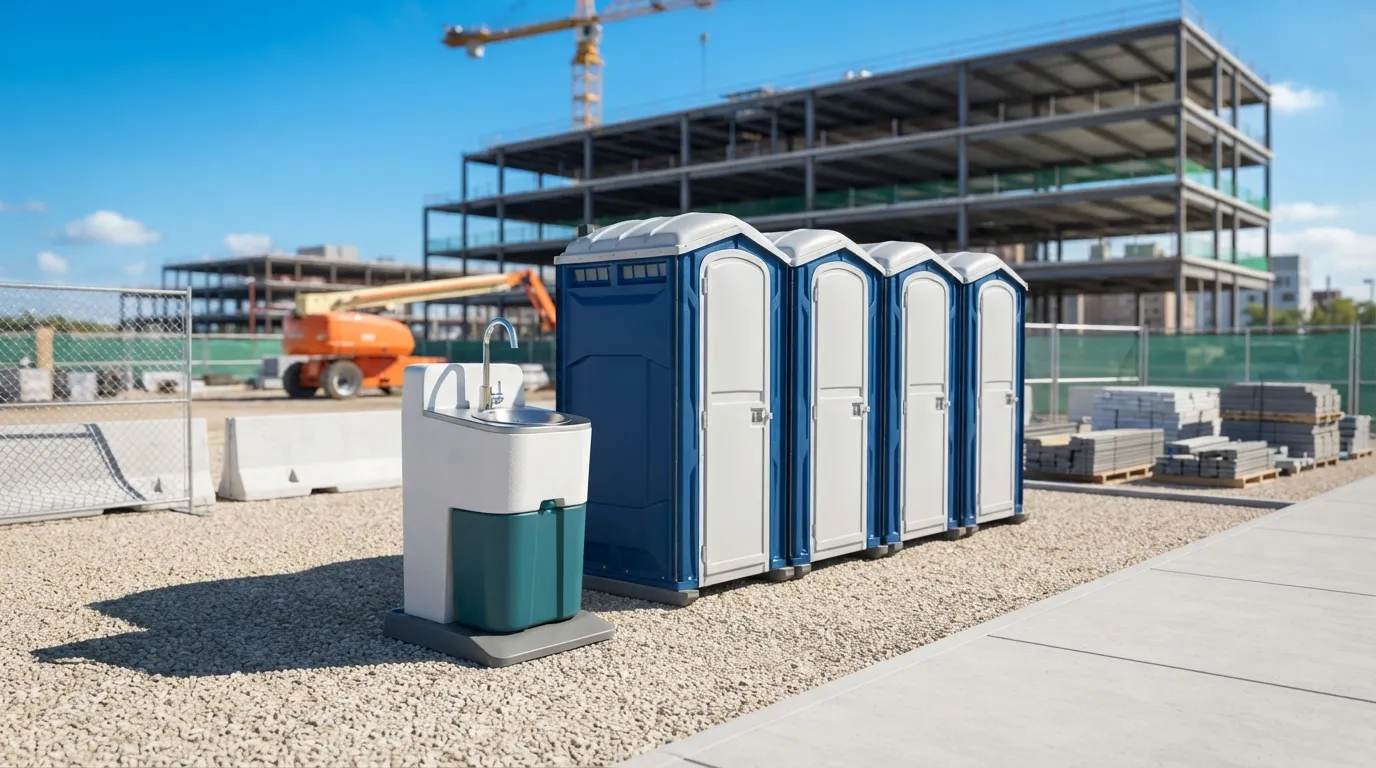
It depends on the work. If your crew is spraying paint, applying coatings, or handling herbicides and insecticides, 1926.51(f)(1) kicks in and washing facilities are mandatory, not optional. That is a narrow rule tied to those specific contaminants, not a blanket handwashing law for every job site. Separately, 1926.51(a)[1] requires potable water at all places of employment, and 1926.51(c) sets the toilet ratios that most Southaven contractors already track through OSHA portable toilet requirements. For general industry workplaces rather than construction, the ratio comes from 1910.141(c)(1)(i) instead. And once you have washing facilities, 29 CFR 1910.141(d)(2) says they need soap and towels or a hand dryer. Hand sanitizer alone does not satisfy that standard. We hear this a lot from crews who assumed a sanitizer pump was enough. It is not, under the letter of that rule. If your project also includes portable toilets, pairing them with a handwashing station rental or a portable sink rental covers both requirements at once instead of scrambling later.
Why do farms and events need different setups?
Agricultural operations run under a separate standard. 1928.110 covers field sanitation for hand-labor employees and requires potable water, toilets and handwashing within a quarter mile walk, at a ratio of one facility per 20 workers. That distance matters. A grower near Southaven with crews spread across a large field cannot put one station at the gate and call it done; the quarter-mile rule means multiple stations may be necessary. We set these up regularly for farm and agricultural restrooms work around Hernando, 8.7 miles south of Southaven, where field layouts often need two or three placements to stay compliant. Events are different again. A wedding, festival or golf tournament is not bound by 1928.110 or by construction rules, but the ADA still applies to accessible units. If you are staging a wedding restroom rental or festival restroom rental, pairing handwash stations with your restroom count keeps the layout functional and keeps lines from backing up onto walkways or parking areas.
Do portable sinks meet the ADA standard?
Some do, some do not, and the difference is in the details. ADA Standards section 308.2.1 sets a maximum forward reach of 48 inches and a minimum of 15 inches, which affects where the soap dispenser and faucet sit on the unit. Section 309.4 requires operable parts to work with one hand, no tight grasping or twisting, and no more than 5 pounds of force, so a stiff pump-style dispenser can fail that test. Section 304.3.1 calls for a 60 inch turning circle nearby, and section 403.5.1 requires a 36 inch clear route to reach the station at all. If you are renting an ADA accessible porta potty for a Southaven job site or event, ask whether the handwash unit next to it meets the same standard, because pairing a compliant toilet with a non-compliant sink defeats the purpose. Our ADA restroom requirements page breaks down section 213.2, which requires at least 5 percent of clustered units to be accessible, and never fewer than one.
Where should stations go on a Southaven site?
Placement drives whether people actually use the station. Put it near the exit of the work zone, not tucked behind equipment, and keep the ground stable and slip resistant per ADA section 302.1. On a construction site, this usually means positioning it beside your toilet cluster so workers hit both on the way out. Our porta potty placement guide covers ground conditions and clearance in more depth, and it matters here too: a roll-off delivery alone needs about 60 feet of straight clearance behind the truck, so plan handwash placement around anything else being delivered to the same lot. For multi-week jobs, check our porta potty rental checklist before delivery day so the layout gets locked in once instead of shuffled around. Southaven contractors managing a full construction site services package often bundle handwashing stations with temporary fence rental and a light tower rental in the same delivery to cut down on separate trips.
| service | duration | typical price |
|---|---|---|
| standard unit | day | $150 |
| standard unit | week | $200 |
| delivery fee | day | $150 |
Delivery fees run separately from the unit rate, and weekly service intervals follow the ANSI/PSAI Z4.3 baseline of one visit per week for up to 10 users over a 40 hour week. Heavier-use sites need more frequent service, which our crews can schedule directly.
How many handwashing stations does a job site need?
There is no fixed number in the OSHA text itself, it is tied to worker count and contaminant exposure. A crew applying coatings under 1926.51(f)(1) needs washing facilities regardless of size. Pair your count with your toilet ratio from how many porta potties do I need for a realistic layout.
Does hand sanitizer meet the handwashing requirement?
No. 29 CFR 1910.141(d)(2) specifically requires soap and towels or a hand-drying device. A sanitizer station is a reasonable add-on, and we do rent hand sanitizer station rental units, but it does not replace a proper handwash setup on its own.
Can I rent just a handwashing station without toilets?
Yes. Plenty of Southaven job sites already have toilets and just need the wash component added. A standalone unit runs the same daily and weekly rates as other standard equipment, and delivery is scheduled the same way as any other drop.
What is the difference between a handwash station and a portable sink?
Mostly capacity and plumbing. A portable sink often includes a larger reservoir and a foot pump, while a compact handwash station is built for tight footprints. Either satisfies 1910.141(d)(2) as long as soap and towels or a dryer are present.
Do event venues near Southaven require handwashing stations?
Requirements vary by venue and permit, not by a single blanket rule. Confirm placement in any public right of way with the city before delivery. For guidance on food-service events specifically, our grease trap pumping and event restroom rental pages cover related setup questions.
Next step
Get a delivery date
Tell us the address, the dates and the headcount. We size the order and confirm the route.