
How do porta potties work on the inside?
Step inside a standard porta potty rental and you will find a seat over the holding tank, a door latch, a roll of paper, and often a hand sanitizer dispenser bolted to the wall. The tank sits below, sized around 60 to 70 gallons, and the whole unit runs about 44 by 48 inches on the ground and stands roughly 92 inches tall, per industry spec sheets. There is no flush handle on a standard unit. Waste drops straight down. The blue liquid you see is a deodorizer and digester that keeps solids broken down between service visits. ANSI/PSAI Z4.3, the industry service standard, sets a baseline of one service visit per week for up to 10 users across a 40 hour week, which is why job sites size their porta potty rental count to crew numbers, not guesswork. A construction worker walking across a Southaven job site to a porta potty is walking to a self-contained unit, not a bathroom hooked to city sewer. That is the whole design: no hookups needed, which is why these units go anywhere a truck can reach.
How do flushable porta potties work?
A deluxe flushable porta potty adds a foot pump or handle that pulls fresh water from a small onboard reservoir and rinses the bowl into the same holding tank below. It feels closer to a real bathroom, with a flush action and often a sink built in, but it is still a closed system with no sewer connection. These units cost more than a standard unit and typically run in the range shown below for a week's rental. Weddings, corporate events, and anything near a venue where guests expect more than a bare-bones unit tend to book the flushable version, alongside an ADA accessible porta potty for guests who need one. Under ADA Standards section 213.2, when single-user units are clustered together, at least 5 percent of the cluster, and never fewer than one, has to be an accessible unit. That rule covers everything from a festival restroom rental lineup to a row of units outside a golf tournament. Southaven event planners booking multiple units should check the porta potty rental cost page before committing to a count.
| unit | duration | low | typical | high |
|---|---|---|---|---|
| standard | week | 130 | 200 | 500 |
| deluxe | week | 150 | 250 | 290 |
| ada | week | 120 | 185 | 240 |
How does a portable sink work?
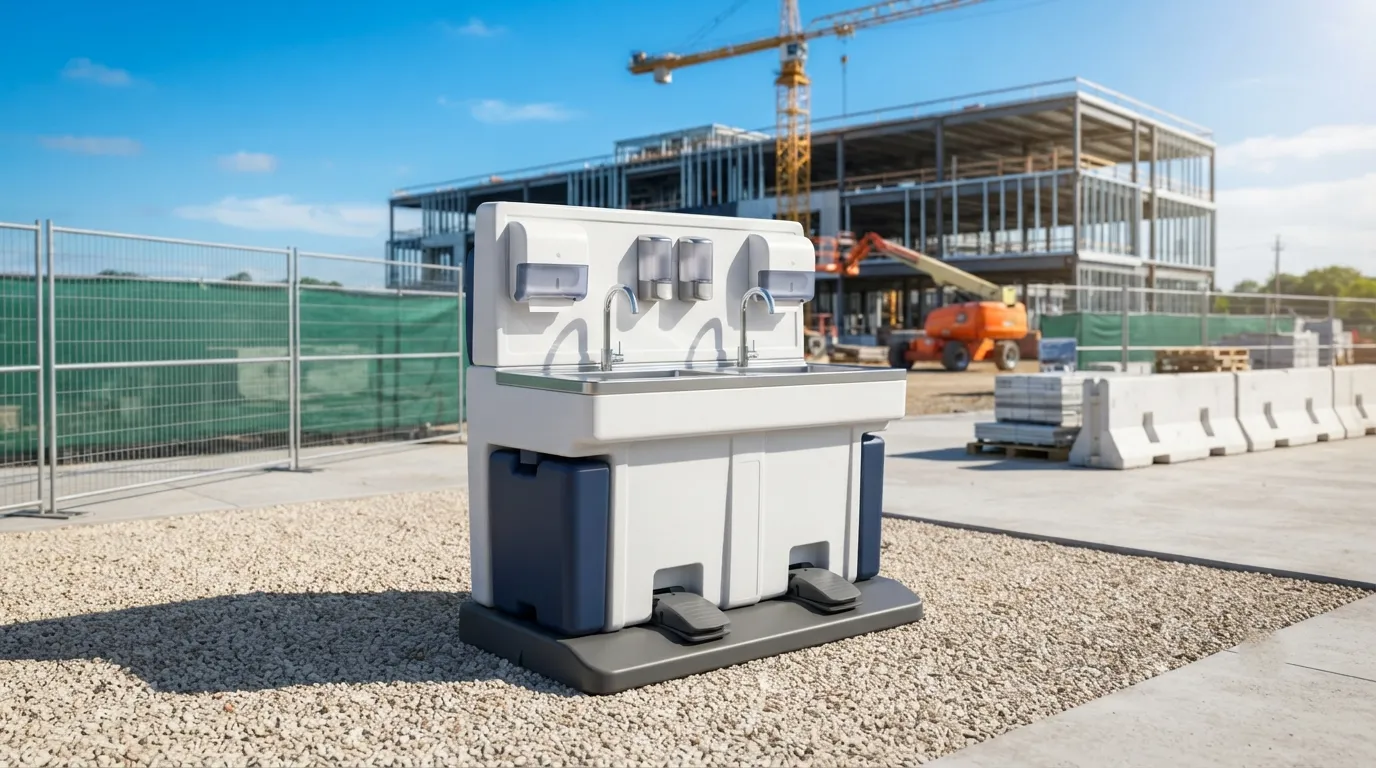
A portable sink rental uses a foot pump or hand crank to draw water from a built-in fresh tank into the basin, and the wastewater drains into a separate holding tank underneath, so nothing runs onto the ground. Soap and a towel dispenser are usually mounted on the unit, which matters because 29 CFR 1910.141(d)(2) requires washing facilities to have soap and towels or a hand-drying device; hand sanitizer alone does not satisfy that rule. On a job site with paint, coatings, herbicides, or insecticides in use, OSHA 1926.51(f)(1) specifically requires washing facilities for workers handling those materials. A handwashing station rental placed near the temporary fence rental line at a construction perimeter covers that requirement without running a water line. For general job site sanitation and toilet counts, OSHA 1926.51(c) sets the ratio: one toilet for 20 workers or fewer, stepping up as crew size grows. Farms and agricultural operations fall under a different standard, OSHA 1928.110, which requires field sanitation within a quarter mile walk for hand-labor crews, which is worth knowing before booking farm and agricultural restrooms near Hernando, about 8.7 miles south of Southaven.
How do camping porta potties work?
Camping and remote-site units work the same way as a construction unit: sealed tank, no plumbing, chemical treatment inside. The difference is mostly footprint and service frequency. A smaller camping-style unit still needs the same 60 foot straight clearance behind a delivery truck if it is being dropped by roll-off style equipment, though most camping units are set with a smaller service vehicle. Southaven customers renting for a weekend event near Olive Branch, about 9.2 miles east, or a race route toward Horn Lake, 5.6 miles west, should check the marathon and race restrooms page for spacing guidance. For longer stays, a monthly porta potty rental makes more sense than booking by the day, and Southaven Porta Pros handles the pickup and swap on a fixed schedule either way. Anyone comparing a porta potty rental per day against a week or month should note that a longer rental never runs cheaper per-day than a short one; it is the total cost that drops. For placement questions near a curb or right-of-way, confirming exact limits with the City of Southaven is the safer move before drop-off.
What chemicals go inside a porta potty?
The blue liquid is a deodorizing digester, not a hazardous chemical. It breaks down solids and holds odor down between pump-outs. It is sealed inside the tank and never touches the user. Ask about portable toilet chemicals near me sourcing if a venue requires documentation.
How often does a porta potty get pumped?
Standard job sites run on roughly a weekly cycle per ANSI/PSAI Z4.3 for typical crew sizes. High-traffic events may need daily service. Southaven Porta Pros adjusts the schedule based on headcount, not a fixed calendar date.
Do porta potties need a water hookup?
No. That is the point. Standard units run entirely on the chemical tank system, no water line or sewer connection required. Flushable units carry a small onboard reservoir, so even those skip outside hookups entirely.
How many porta potties does a job site need?
It depends on crew size, per OSHA 1926.51(c) ratios. Twenty workers or fewer need one toilet. See how many porta potties do I need for a full breakdown by crew count.
Can a porta potty freeze in winter?
Yes, in hard freezes the tank liquid and any onboard water can freeze. Southaven winters rarely sit at extreme lows for long, but see porta potty in winter for how servicing adjusts.
Next step
Get a delivery date
Tell us the address, the dates and the headcount. We size the order and confirm the route.